


MARILYN ARNOLD
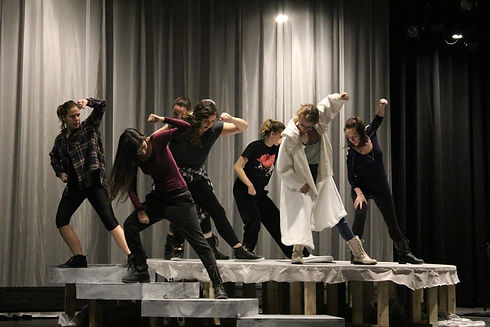
Marilyn is an actor, dramaturg, and educator with a Bachelor of Arts in Theater from Saint Louis University where she was able to create and participate in coursework focused in those mediums. She also trained at the London Dramatic Academy in London, England. She has had the privilege of working with Post-Romantics, Equally Represented Arts, St. Lou Fringe, and Shakespeare Festival St. Louis in multiple capacities. As an educator she has worked with Main Street Theater- Houston, Metro Theater Company, and Summer at SLU. She believes that all three mediums intertwine and complement one another in a way that enhances her art, her empathy, and her point of view.

ARTIST STATEMENT
Art exists in many forms. Some include Art for Art’s Sake (theatre for fun or to produce more artists) or Art for Artist’s Sake (theater as an “escape” for the artist). There are classical plays picked up out of their original era and placed anywhere the director can think of, because the themes are so universal, why not stick it there? The theatre produced in this style still provides an experience for the audience that is uniquely live and shared with one another. Ideally they’ll all get to laugh or cry or go “oooh” together at the same shocking confession... but is it enough for the art to be relevant now or even to matter in the long run of its community or art form? Does that even matter?
If you haven’t guessed- to me it matters. Theatre has the power to spread awareness, spark debate, heal; to accomplish these possibilities the art must reflect its community using any and all the tools available, including theme, content, structure, means of production, and more. The art doesn’t need to be social justice themed to be relevant or progressive, it simply needs to be grounded in its intentions. Shakespeare’s own way of writing was innovation with a touch of theft, to create stylistically and thematically significant and unique art. Shakespeare made his living on copying and transforming stories, histories, or even plays by his contemporaries. Without adaptation and exploration, the evolutionary quality of theatre becomes lost. All of a sudden theater is a museum piece that you can learn in english class or maybe pay hundreds for to see on Broadway. Museum pieces rarely feel urgent; most feel elite.
I wear many hats; dramaturg, actor, educator. Every time I throw myself into one I think, “This is it! This is the aspect of theatre I want to settle down with!” However, I’ve come to realize none of these battle with one another. All come back to treating theatre as a tool to arm the audience with. I provide analysis, platform, questions, and urgency as all three. Dramaturg Marilyn provides contextual, historical, and structural support and resources to create this kind of new theatre and enhance pre-existing pieces. Actor Marilyn is in the heart of the collaboration process examining the piece and the self, ultimately becoming the presentation of the platform. Educator Marilyn takes all of this and guides students through thinking how theatre and production applies to their own life and experiences, before challenging them to apply it to a broader idea. Theatre that doesn't cause intrigue, questions, or conversation is empty theatre. As an artist I work to create and facilitate the opposite.